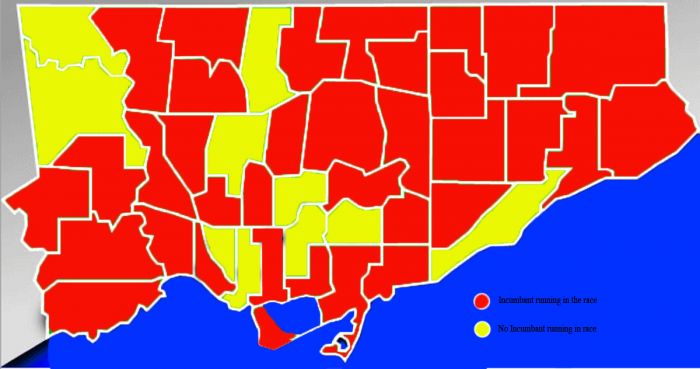
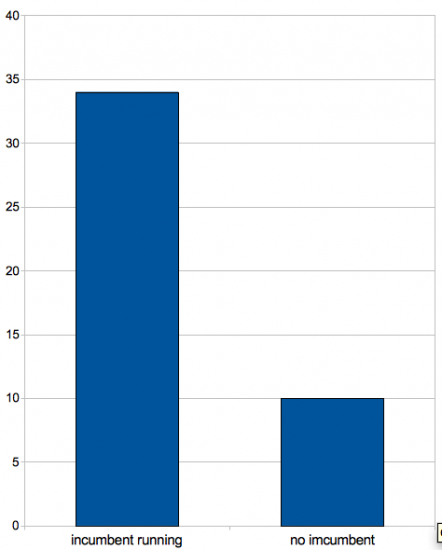
Forty-four council seat are up for grabs in Monday's election. However most of the faces on council are likely to stay the same. Thirty-four councillors are running for re-election. Only ten councilors are are giving up their seats.
Incumbents usually win in election races. In the last Toronto election, in 2006, 37 incumbent were running for re-election and only one was defeated. Similarly in the 2003 municipal election one incumbent lost their seat on council.
Once councilors are elected they usually stay in office for multiple terms, some have been on council for decades. Outgoing city councillor Howard Moscoe first joined North York's city council in 1978.
With no term limits and the winning candidate needing only the most votes rather than a majority of votes, the current system helps keep incumbents in office.
"Some [incumbents] are incredibly popular, but many others are not," said voting reform advocate Desmond Cole, "winning with 25% is not what we think of in a democracy, it make people angry"
Cole works with Ranked Ballot Initiative Toronto (RaBIT), a group that wants voters to mark the their top three choice on the ballot in order of preference. They believe this would reduce strategic voting and allow voters to vote for what they believe in, not against the worst candidate.
Cole believes that term limits need not be imposed, so long as the people elected are popular, instead of winning by splitting the vote. He said that in the current system "the more people who run against an incumbent the better they will do."
On Monday's election 77% of Ward will have incumbent councillors running in them.
Wards to Watch on Monday:
On election day, be sure to watch the wards with no incumbent running, as they will probably best show how council will be changing. Those wards are: 1, 2, 10, 15, 18, 19, 22, 27, 29, & 36

